On August 27, 2025, Brazilian President Luiz Inácio Lula da Silva signed a presidential decree that did something no government had done before: mandate an enhancement-layer codec as part of a national broadcast standard. With that signature, Brazil’s TV 3.0 officially branded DTV+ became the world’s first next-generation television system to require MPEG-5 LCEVC alongside VVC, MPEG-H Audio, and ATSC 3.0 transport.
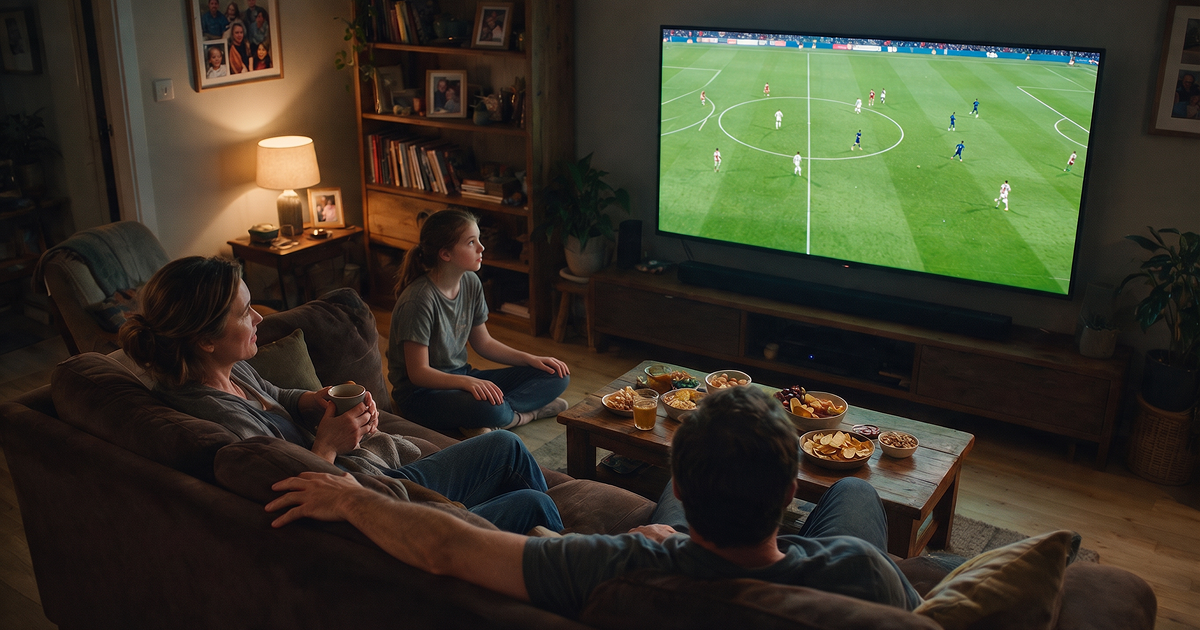
This is not a lab trial. It is not a proof of concept confined to a trade-show floor. It is a country of 210 million people, over 70 million television households, and the most-watched sporting event on Earth, the 2026 FIFA World Cup,
For media executives, broadcast CTOs, and standards-body members watching from the outside, Brazil’s TV 3.0 is the clearest signal yet that the scalable, enhancement-layer architecture works at national scale. More importantly, the playbook Brazil built from the standards process to silicon partnerships to licensing model, is replicable. Here is how they did it, and what the rest of the industry should take from it.
From Forum to Presidential Decree, the TV 3.0 Story
Brazil’s path to DTV+ began inside the SBTVD Forum, the government-chartered body responsible for the country’s digital television standards. The Forum ran a rigorous, multi-phase evaluation of next-generation video technologies, culminating in Phase 3 testing that pitted codec configurations against each other under real broadcast constraints.
The results were unambiguous. VVC combined with LCEVC delivered 4K HDR at 7.59 Mbps in controlled testing. . That number is the difference between fitting a 4K HDR channel into an existing 6 MHz broadcast spectrum, for indoor reception, and not fitting it at all. What the Forum quickly saw was a path to 4K without the spectrum cost normally associated.
Globo, Brazil’s dominant broadcaster, took those lab results into the field. During the Paris 2024 Olympics, Globo deployed a full TV 3.0 live production system in Rio de Janeiro. The UHD feed was encoded using LCEVC-enhanced VVC and delivered at 10 Mbps over the air, well below the 14 Mbps that Globo’s current system uses for standard HD. The showcase ran on consumer-grade devices from Hisense, Jiuzhou, Realtek, and Amlogic, with Mirakulo middleware and using Harmonic and MainConcept for encoding.
That Paris demonstration was the proof point the Brazilian government needed. By August 2025, the presidential decree was signed. Commercial service availability is targeted for mid-2026, aligned with this year’s FIFA World Cup.
The TV 3.0 Technical Stack
Understanding why Brazil chose this architecture requires understanding the physics of broadcast spectrum. A single terrestrial broadcast channel in Brazil’s 6 MHz allocation cannot carry a standalone VVC 4K HDR stream at acceptable quality, especially considering that indoor antenna reception is required, even in densly populated areas. The bitrate ceiling is too low. A monolithic next-generation codec, no matter how efficient, could not solve this problem alone.
The DTV+ solution is a layered stack. ATSC 3.0 provides the IP-native transport layer, replacing the aging ISDB-T infrastructure. VVC serves as the base codec, delivering state-of-the-art compression for the foundation layer. LCEVC operates as a lightweight residual correction layer on top of VVC, recovering the detail lost when the base codec is pushed to its limits within the available bandwidth. MPEG-H spatial audio completes the package.
The encoder produces a compatible lower-resolution VVC base stream (full HD) plus a compact LCEVC enhancement stream to best compress the source UHD content. At the receiver, the VVC base is decoded and upscaled, then the LCEVC residuals are applied to restore full 2160p resolution. The enhancement layer adds minimal processing overhead, a critical consideration for consumer devices where power, heat, and silicon cost are tightly constrained.
Building the Ecosystem
Brazil’s TV 3.0 effort recognized the importance of building the ecosystem in parallel with establishing the standards. Realtek and Amlogic have both integrated LCEVC decoding into their platforms, and Jiuzhou has built reference set-top box designs around these chipsets. Hisense demonstrated smart TVs running the full DTV+ stack during the Paris 2024 showcase. Montage LZ Technologies have also launched the Symphony 6, the first set-top box SoC designed from the ground up with LCEVC decoding integrated. At the beginning of commercial operations this year, the expectation is to have up to 5 different set-top box brands and 2 TV manufacturers with DTV+ compatible models available to consumers.
Multiple SoC vendors, device manufacturers, and form factors from set-top boxes to integrated televisions represent supply-chain diversity, exactly what broadcasters and regulators need to see before committing to a national-scale technology shift and deployment.
Lessons for ATSC 3.0 in North America
Brazil’s DTV+ deployment is targeting commercial readiness for the 2026 FIFA World Cup, co-hosted by the United States, Mexico, and Canada beginning in June. For Brazil, this is not merely a deadline — it is the highest-stakes live broadcast event the country will face this decade.
Brazil is not operating in isolation. The ATSC itself formalized VVC and LCEVC support when it approved the A/345 VVC Video standard on July 17, 2025. That standard includes optional scalability based on LCEVC, aligned with CMAF. The technical path for North American broadcasters to add an LCEVC enhancement layer to their ATSC 3.0 deployments is now codified.
The deployment footprint is already substantial. As of early 2026, ATSC 3.0 signals reach more than 75% of the U.S. population across 80-plus markets, with 125-plus stations on air and an estimated 10 to 15 million ATSC 3.0-capable television sets in American homes. V-Nova and Ateme demonstrated live LCEVC-enhanced 4K broadcast over ATSC 3.0 at the NextGen Broadcast Conference in 2025, proving the interoperability of the full encoding and transmission chain.
Meanwhile, the National Association of Broadcasters has petitioned the FCC for a mandatory ATSC 1.0 sunset: February 2028 for the top 55 markets, February 2030 for all remaining markets. If the FCC acts on that petition, every U.S. broadcaster will need a viable path to 4K within constrained spectrum. The enhancement-layer architecture that Brazil is now deploying offers exactly that.
The difference between Brazil and the United States is not technical capability it is policy clarity. Brazil has a decree, a timeline, and a World Cup deadline. The U.S. has a petition under review. The technical building blocks, however, are identical.
For broadcasters and regulators in North America, Europe, Southeast Asia, and Africa, the question after a successful Brazilian World Cup deployment will shift from “Does this technology work?” to “How quickly can we adopt it?” And Brazil, by moving first, has positioned itself to answer the question before anyone else has to ask it. Here’s to enjoying your favorite team in beautiful 4K without breaking your bandwidth budget.